Green Roofs And Vertical Gardens In Modern Urban Design
A planted rooftop does more than look good. It insulates, manages stormwater, and supports biodiversity in urban environments that would otherwise offer none.
Urban density has consequences for the natural environment that accumulate quietly and then become very difficult to reverse. As cities expand and building footprints cover more of the ground, biodiversity contracts, stormwater has nowhere to go, and ambient temperatures rise as concrete and asphalt absorb and re-emit heat that vegetation would have intercepted. Green roofs and vertical gardens address several of these problems at once — which is part of why they've moved from architectural novelty to mainstream practice in urban design.
A green roof is a planted surface built into a building's rooftop: a layered system that includes waterproofing, drainage, root barriers, growing medium, and vegetation. The functional benefits are substantial. Planted surfaces insulate the building below them, reducing the thermal load that drives heating and cooling demand. They retain rainwater and release it slowly, reducing the peak volumes that overwhelm urban drainage during heavy rain. They provide habitat for birds, insects, and pollinators in environments that would otherwise offer none. In Nairobi and other Kenyan cities, where residential development in high-value areas increasingly pushes up against natural landscape, green roofs offer a way to integrate building and environment rather than simply displace one with the other.
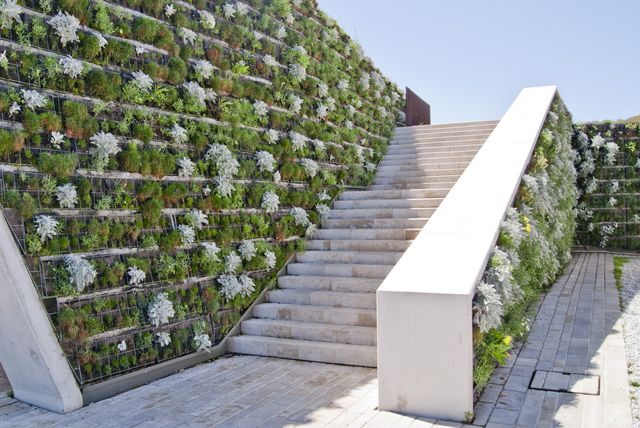
Vertical gardens — planted walls on building exteriors or interiors — solve a different problem. In dense urban settings where ground-level space is limited, a vertical garden injects vegetation without consuming footprint. The plants filter airborne pollutants, release oxygen, and provide insulation in the same way as a green roof but on a vertical surface. They also change the visual character of a building in ways that affect the surrounding streetscape, not just the building itself.
Both approaches require design thinking that begins with what the plants actually need: appropriate species for the local climate and the specific exposure of the surface, irrigation systems that function reliably without excessive water use, and structural consideration of the additional loads involved. Native species tend to perform better and require less intervention than imported alternatives — they're adapted to local rainfall patterns and temperature ranges, and they support local biodiversity more effectively.
The long-term case for integrating planting into urban buildings rests on the same logic as passive design: working with natural systems rather than against them produces buildings that perform better, cost less to maintain, and age more gracefully than those that treat the natural environment as an obstacle to be managed.