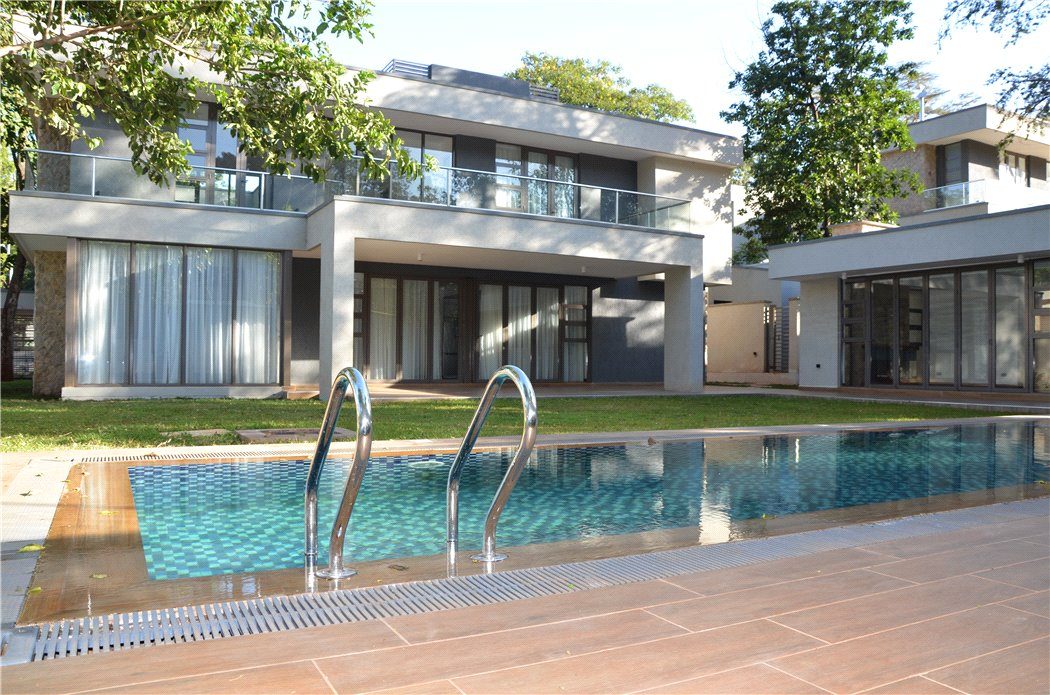
Designing Outdoor Spaces That Complement Residential Pools
The pool is the easy part. Designing the space around it — the zones, materials, shade, and lighting — is what determines whether it actually gets used.
A pool changes the logic of an outdoor space. It becomes the organising element — the thing everything else relates to — and the design decisions that follow from it determine whether the area around it works as a place to live or just as a backdrop to the water.
The pool's position within the landscape is the first decision and the one that constrains all the others. Its relationship to the house — how directly it connects to the interior, how visible it is from the main living spaces, how it sits relative to the sun's path through the day — shapes how it gets used. A pool that can't be seen from the kitchen when children are swimming is a safety problem before it's a design problem. One that receives direct sun for most of the day is more inviting than one that falls into shade by mid-afternoon.
Zoning the space around a pool into areas with different purposes — places to sit and shade for reading and conversation, areas for outdoor dining, a transition zone where wet swimmers can move between pool and house without bringing water inside — produces an outdoor space that functions across different occasions rather than only for swimming. These zones don't need to be formally defined. They need to follow from how the space will actually be used.
Materials for pool surrounds need to withstand what pools subject them to: constant moisture, chlorine exposure, bare feet on hot surfaces, and the mechanical stress of furniture moved regularly. Textured stone and treated timber perform well in these conditions; smooth polished surfaces are slippery when wet and impractical. In a humid climate, materials that resist mould and don't degrade with UV exposure need to be selected as a baseline rather than as a premium.
Planting around a pool serves functional purposes beyond aesthetics. It provides privacy, creates shade, and reduces the ambient temperature of the surrounding area. Species that don't shed heavily — avoiding leaves and debris in the water — and that can tolerate the reflected light and occasional chlorine spray that pool environments produce are the ones that will still look good in five years. Shade structures — pergolas, sails, deep overhangs — extend the hours during which the poolside is usable and reduce sun exposure to the water surface, slowing evaporation.
Outdoor lighting for a pool area needs to handle two different conditions: evening use of the pool itself, where underwater lighting and perimeter lighting are safety requirements, and the ambient quality of the space as an outdoor room after dark. Getting both right requires treating them as separate layers that happen to coexist, rather than a single scheme trying to do both.