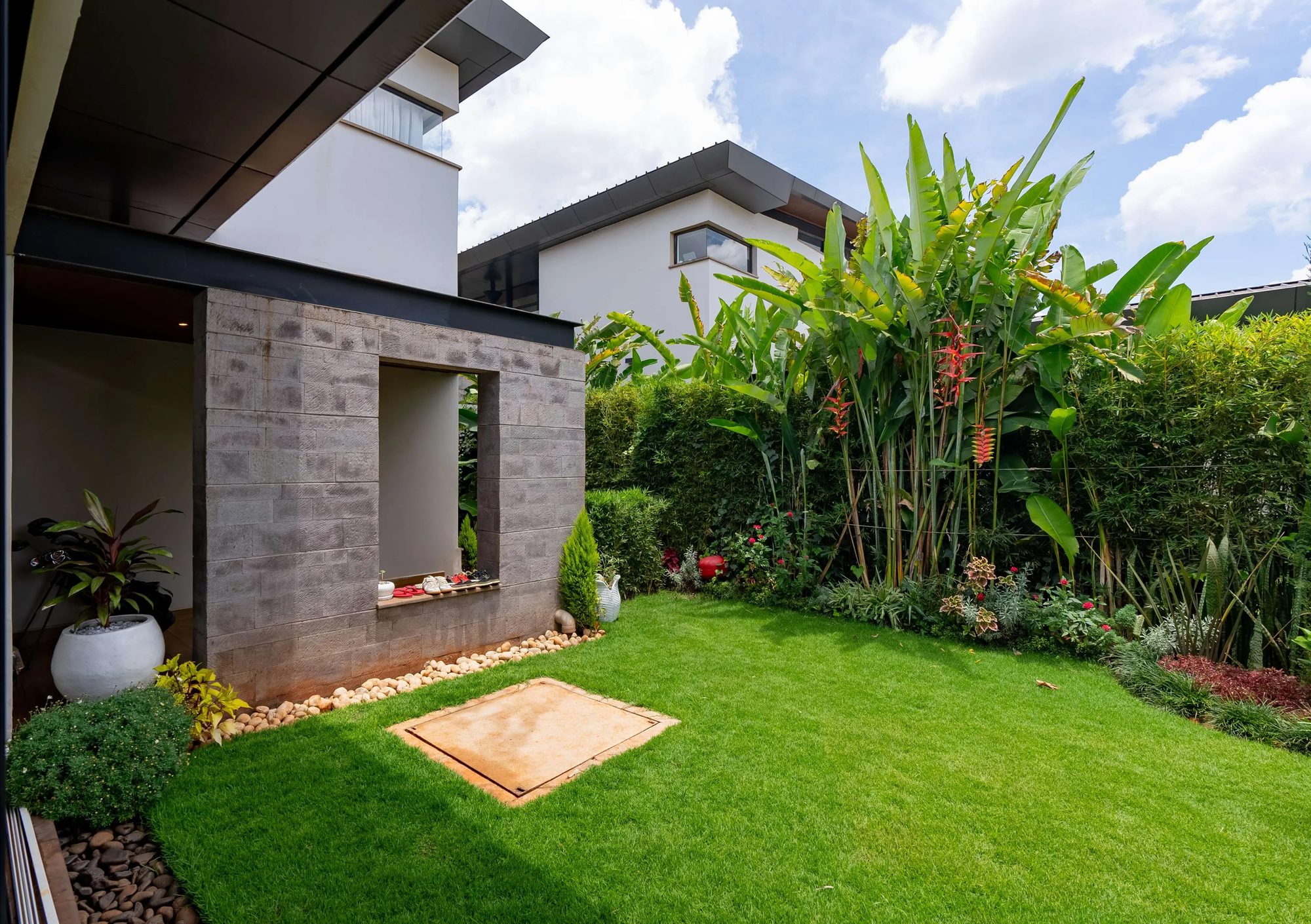
Balancing Nature And Architecture: Creating The Perfect Garden
Most gardens fail not because of the plants but because the spatial logic was never resolved. The same thinking that goes into rooms needs to go into the space around them.
A garden is an architectural problem as much as a horticultural one. The questions that determine whether an outdoor space works — how it relates to the interior, how it manages light and shade, how it handles the movement of people through it, what it looks like at different times of day and year — are spatial questions. Answering them well requires the same kind of deliberate thinking that goes into the rooms it adjoins.
The starting point is always the same: understanding how the space will actually be used. A garden designed for children to run through requires different things from one intended primarily for quiet sitting. A space meant for outdoor dining in the evenings has different lighting, surface, and shade requirements from one that functions mainly as a visual extension of an interior. These distinctions shape every subsequent decision — the placement of planting, the choice of hard surfaces, the positioning of seating, the management of levels. Getting them wrong produces a garden that looks considered but doesn't work.
Plant selection is where the gap between aspiration and maintenance reality tends to open up. Plants chosen for their appearance in photographs or at their moment of peak flowering often perform poorly in the specific conditions of a particular site — the soil, the aspect, the rainfall pattern, the microclimate created by surrounding structures. Native species close that gap. They're adapted to local conditions, require less intervention to establish and maintain, and support the insects and birds that make a garden feel genuinely alive rather than curated. In Kenya, where the range of native species is extraordinary, there's no shortage of material to work with.
Architectural elements — hard surfaces, walls, water features, pergolas, planting structures — give a garden its bones. They determine how the space reads when plants are dormant, how people move through it, and how it holds its character across seasons. These elements need to be proportioned to the space they occupy and to the building they relate to. A pergola that's too small for the terrace it covers reads as an afterthought. A boundary wall at the wrong height changes the relationship between garden and landscape in ways that can't be compensated for by planting. Getting the scale of these elements right requires the same attention to proportion that interior design requires — with the additional variable that everything is seen against a sky rather than a ceiling.
Flow matters outdoors as much as it does inside. Pathways that lead somewhere, that invite movement and reward it with changing views or textures underfoot, make a garden more engaging to spend time in than one that can be read entirely from a single vantage point. The sequence of spaces — an open lawn giving way to a shaded area, a planted corridor opening into a courtyard — produces the quality of discovery that makes gardens interesting across time, not just on first encounter.